
Early Life
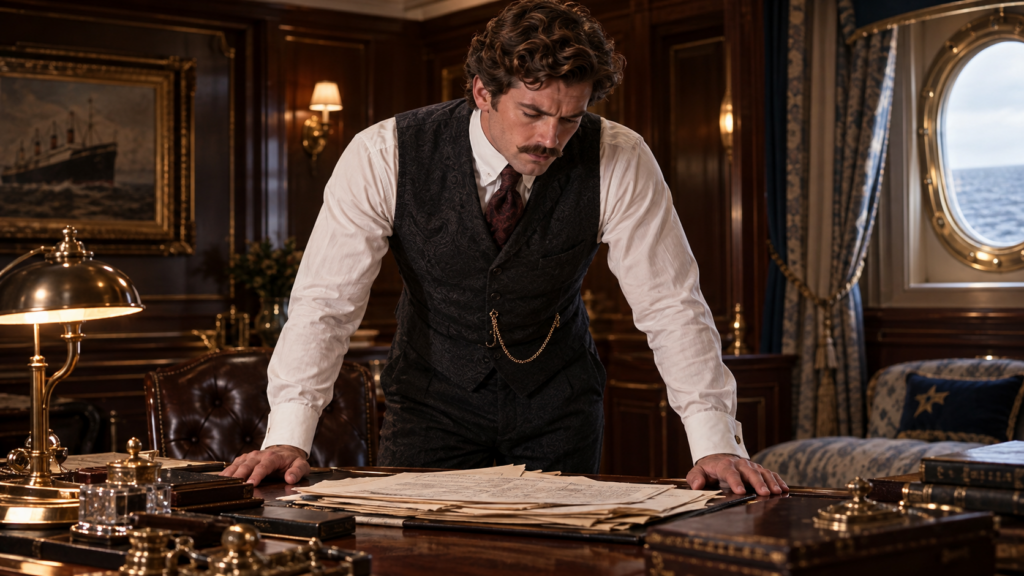
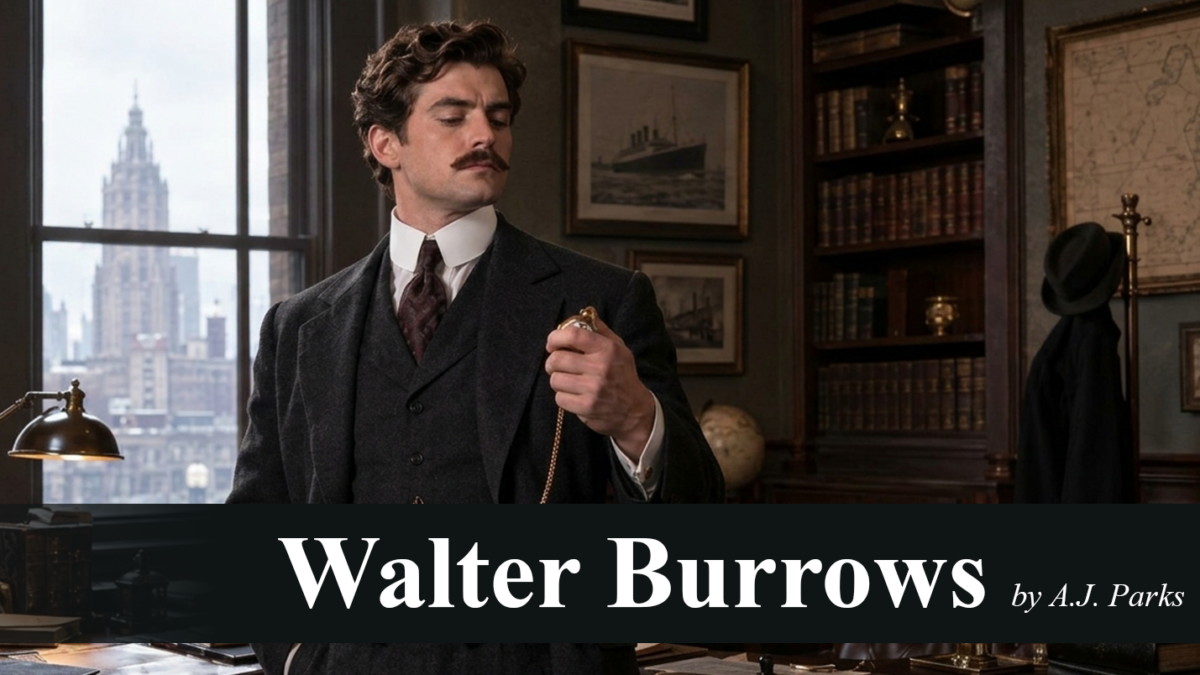
Walter Burrows was born into a working-class family in northern England, where the rise of industry transformed towns and communities with steelworks, factories, and railways. From an early age, he was fascinated by the machinery and craftsmanship that powered the industrial world around him. While others saw steel as little more than a material used to build things, Walter became transfixed by its strength, its limitations, and the skill required to turn raw materials into something extraordinary. Determined to build a better life for himself, he pursued every opportunity to learn, developing a practical understanding of metallurgy and engineering that would eventually distinguish him from his peers.
Through years of hard work, Walter established himself as a knowledgeable and respected figure in the steel industry. He was not a naturally sociable man, preferring careful observation and practical results to empty promises. His ambition was balanced by a strong belief that a man’s reputation depended on the quality of his work and the responsibilities he accepted. His marriage to Helena brought stability to his life, and the birth of their daughter, Evelyn, gave him another reason to succeed. He wanted Evelyn to enjoy opportunities he had never possessed, although his desire to protect her sometimes made him overbearing. Her curiosity and stubborn independence reminded him of his younger self, a resemblance he found both endearing and worrying.
Burrows Steel
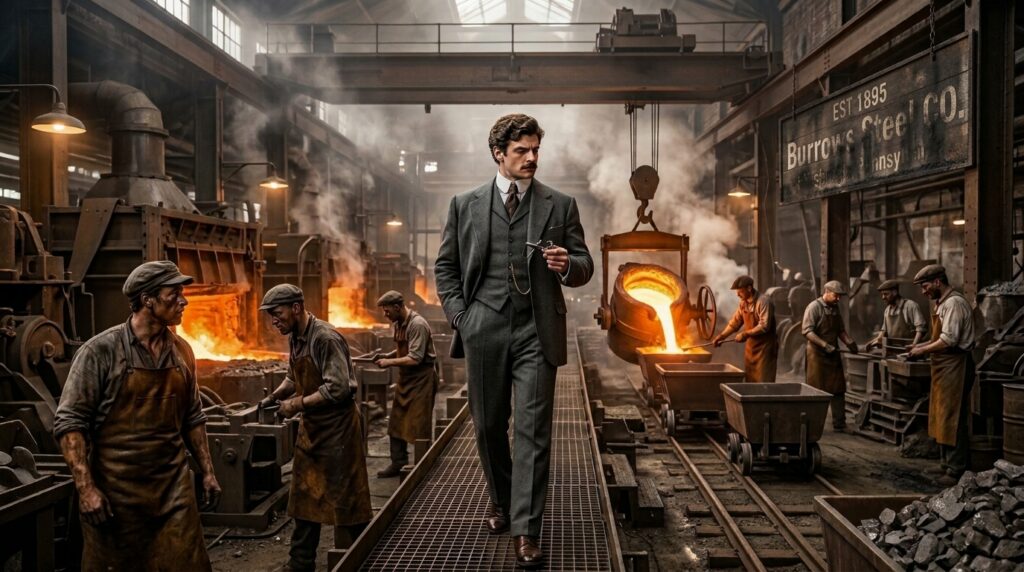
Walter eventually became the owner and co-founder of Burrows Steel alongside his brother before his untimely death. Under Walter’s leadership, the business earned a reputation for reliability and technical expertise, allowing him to secure increasingly prestigious contracts. Walter took a personal interest in the company’s work, refusing to treat steel as an ordinary commodity. He wanted to understand how his products would be used, what pressures they would face, and whether they could withstand the demands placed upon them. He knew that the strength of a structure was only as dependable as the materials and decisions behind it, a principle that shaped both his professional philosophy and his growing reputation.
Success also introduced Walter to a world of powerful businessmen, influential engineers, and complicated private arrangements. He understood that large contracts rarely involved technical considerations alone, and he learned to navigate competing interests without drawing unnecessary attention to himself. Although he took pride in his company’s achievements, he was increasingly aware that business decisions could carry consequences beyond financial gain. Protecting Burrows Steel became a responsibility he took seriously, particularly as the company became associated with projects that attracted international attention. Walter believed he could manage difficult situations through discretion and careful judgment, but there were times when the interests of his company and his personal principles became harder to reconcile.
Building the Titanic
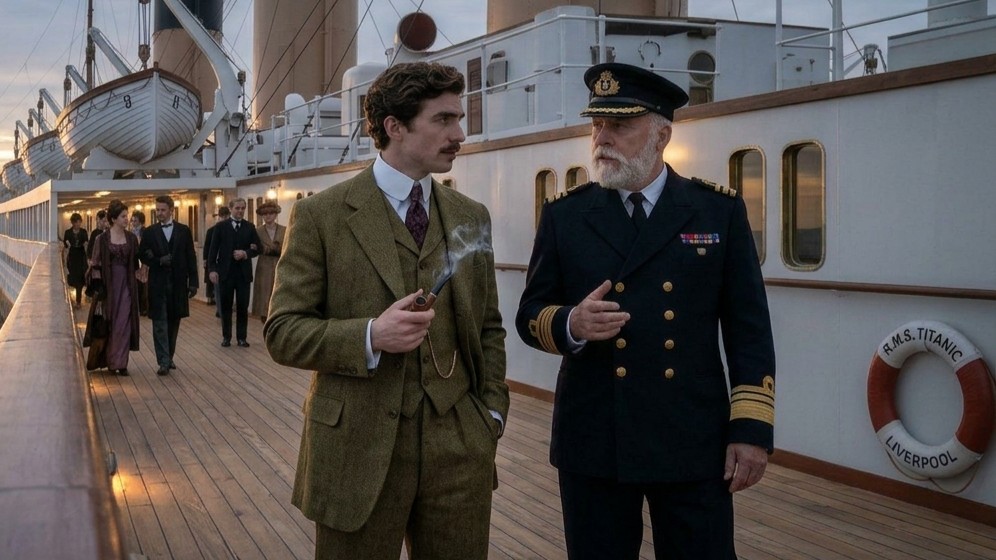
Burrows Steel’s involvement in supplying materials for the RMS Titanic represented one of the most significant achievements of Walter’s career. Constructed by Harland and Wolff in Belfast for the White Star Line, the Titanic was designed to be among the most impressive ocean liners in the world. Walter recognized the importance of the project immediately. The ship demanded the coordinated efforts of thousands of workers, engineers, designers, and suppliers, and he was proud that his company would contribute to a vessel intended to represent the very best of modern engineering. His professional dealings brought him into contact with people such as Thomas Andrews, whose attention to detail and commitment to the ship’s design earned Walter’s respect.
However, as construction progressed, Walter became aware that certain decisions surrounding the ship were more complicated than they first appeared. Some design alterations and additional features raised questions he could not easily dismiss, particularly when the reasoning behind them was not entirely clear. His dealings with Hargreaves, a well-connected man whose interests extended into the business surrounding the Titanic, added another layer of uncertainty. Walter found himself involved in discussions that required discretion, and he became increasingly careful about what he revealed to others. Although he remained proud of Burrows Steel’s contribution, he understood that any controversy involving the ship could threaten the reputation he had spent years building.
The Maiden Voyage
In April 1912, Walter boarded the Titanic at Southampton with his wife, Helena, and their fourteen-year-old daughter, Evelyn. The maiden voyage offered him the opportunity to see the finished ship in operation and to witness the result of years of industrial labor. He took pride in the vessel’s scale and craftsmanship, recognizing the effort required to transform thousands of individual components into a functioning ocean liner. For Walter, the crossing was both a personal milestone and a professional demonstration. The Titanic was expected to strengthen the reputations of the companies responsible for her construction, and he hoped the voyage would confirm the quality of their work.
Despite the excitement surrounding the ship, Walter struggled to set aside his concerns about the people and decisions connected to her construction. His interactions with Hargreaves remained a source of unease, while his attention to certain design details made it difficult for him to relax completely. He tried to keep these worries from his family, especially Evelyn, whose curiosity often led her into situations he would rather she avoided. When Eleanor Vance entered their lives, Walter noticed her unusual interest in the ship and the questions she seemed determined to pursue. He could not determine precisely what she knew, but he recognized that her attention might bring uncomfortable matters into the open. As April 14 approached, Walter found himself balancing his pride in the Titanic against an increasingly troubling sense that not everything aboard her was as it appeared.