

Early Life
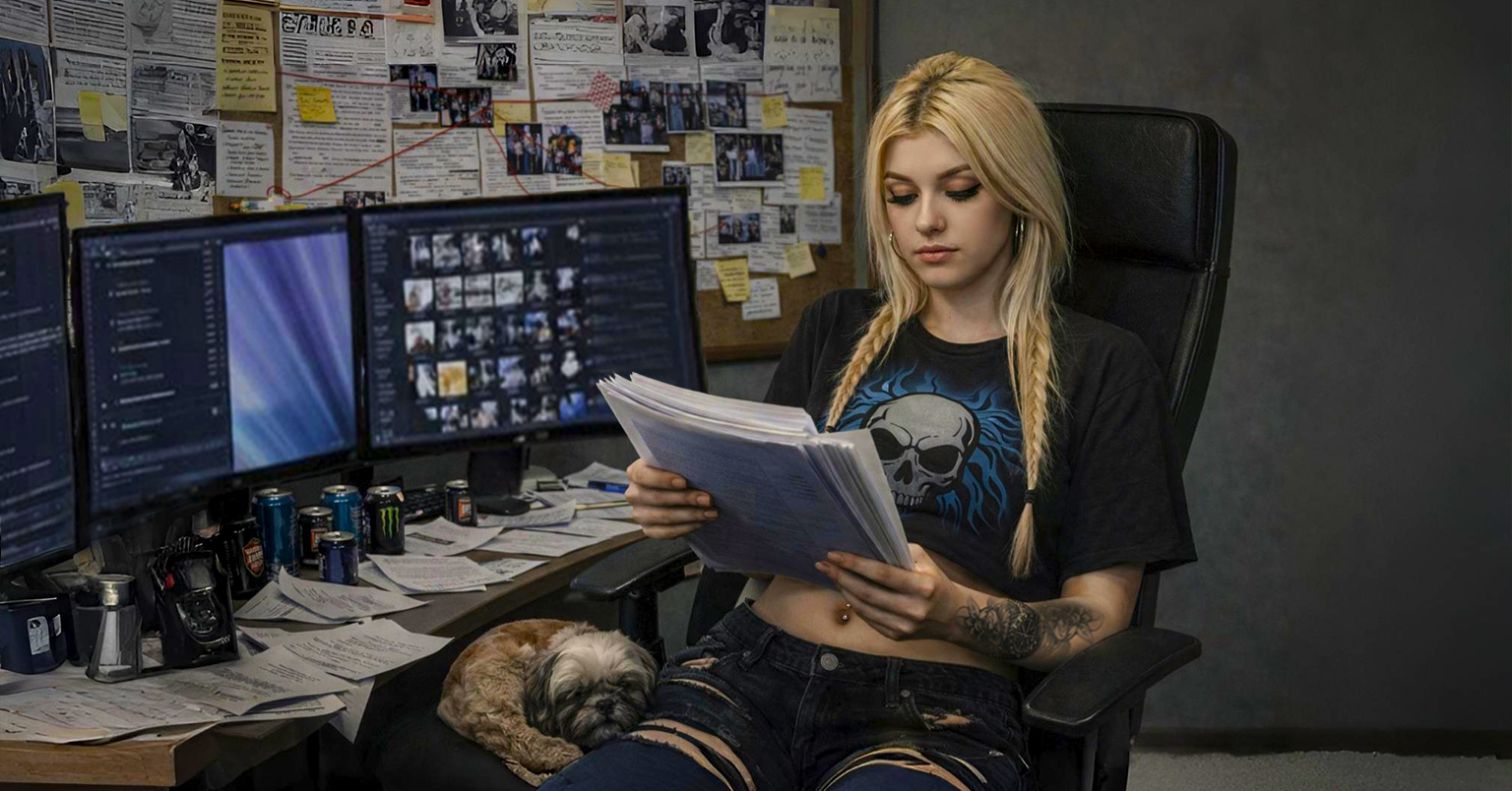
From an early age, Alex Anderson showed signs of an intelligence that did not fit neatly into classrooms or lesson plans. She grew up with two parents who tried to understand her, and a younger brother, who would eventually go to Law school. By the time Alex was eight years old, she had already assembled her own computer, scavenging what she called “scraps” from broken PCs around the house, discarded school equipment, and outdated machines no one else bothered with. What looked like junk to everyone else felt like a possibility to her. She learned by taking things apart, understanding how they failed, and then rebuilding them better, faster, and more secure than before.
In school, Alex was often reprimanded for not paying attention. Teachers mistook her wandering gaze for disinterest, unaware that her mind was usually several steps ahead of the lesson. Despite this, she consistently outperformed most of her classmates, not through memorization, but through instinct and curiosity. At ten years old, she hacked into the school’s main computer system. She did not alter grades or steal information. She did it because a friend dared her to try. When confronted, she explained calmly that the system was insecure and needed fixing, a response that only confused the adults more.
Life After High School
College was never part of Alex’s plan. Despite her parents’ insistence that higher education was the only path forward, she saw it as unnecessary, even restrictive. Throughout high school, she spent more time writing code in the margins of her notebooks than listening to lectures. By eighteen, she had already built her own firewall mainframe and successfully infiltrated several school and local government servers, not for profit or sabotage, but to demonstrate how vulnerable they truly were.
Instead of enrolling in college, Alex turned to freelancing. She wrote code for websites, developed custom programs, and took on cybersecurity contracts that paid more than many of her former teachers earned in a year. By nineteen, she was working independently in cybersecurity, coding, and data retrieval. The work suited her. It gave her freedom, autonomy, and the ability to follow problems wherever they led, without having to justify herself to anyone.
The Quest for the Truth
It was during a routine data recovery job that Alex’s worldview began to shift. She noticed patterns in the files she recovered, data that had been deliberately hidden, obscured, or buried deeper than necessary. The question that followed was simple, but dangerous: Why? If people were willing to hide this much, what else were they concealing?
That curiosity spiraled outward. Alex began researching historical conspiracies, using her technical skills to navigate forums, encrypted servers, and dark web archives most people never knew existed. She explored theories surrounding the Kennedy assassination, the moon landing, and classified government operations, approaching each not as a believer but as an analyst. She did not want to believe in conspiracies. She wanted to uncover the truth.
Above all else, Alex became obsessed with the Titanic. She was convinced the ship had been swapped with its sister vessel, the Olympic, and deliberately sunk for a massive insurance payout. The inconsistencies in blueprints, eyewitness accounts, and corporate records gnawed at her. The deeper she dug, the more certain she became that the official story was incomplete, if not entirely false.

The Time Jump
While investigating what she believed to be the final missing link in the Titanic conspiracy, Alex stumbled upon a hidden dark web location containing documents and blueprints she had never seen referenced anywhere else. These files were detailed, precise, and disturbingly authentic. Among them was a single link, accompanied by a simple promise: “Unwritten Truths Revealed.”
Late one night, with her Shih Tzu, Champagne, curled on her lap and her firewall fully operational, Alex clicked the button labeled “Embark”. She expected corrupted files, a simulation, or maybe a dead end.
Instead, everything went black. And when she woke up, history was no longer theoretical.